
Kettlebell Workouts After 40: A Simple Full-Body Plan That Works

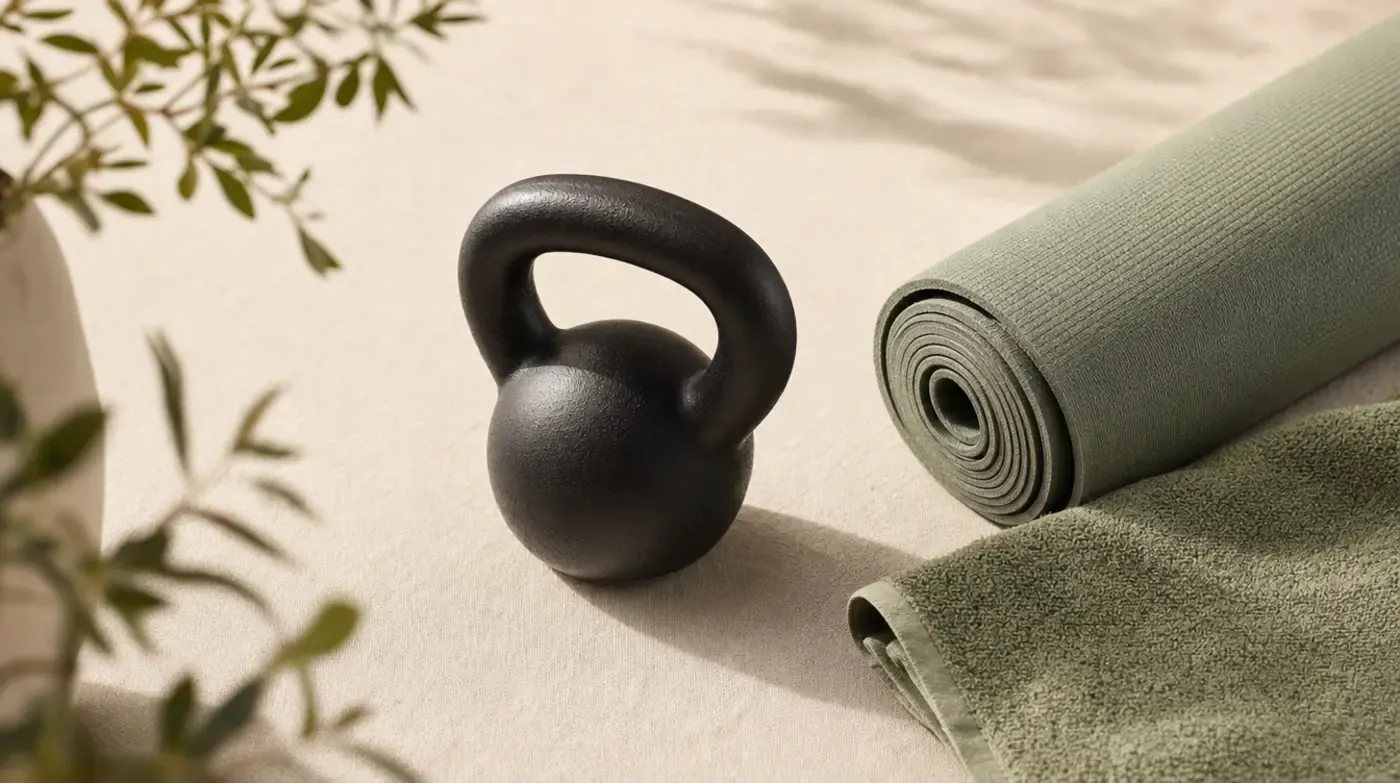
If you want the most useful piece of strength equipment for the money after 40, it is hard to beat a single kettlebell. It trains strength and conditioning at once, it costs little, it lives in a corner, and it brings back the hip hinge, the movement pattern a desk-bound life quietly steals. Here is how to start.
Why kettlebells work so well after 40
- Time-efficient. A few compound moves hit your whole body, so a useful session takes twenty minutes, not ninety.
- Strength and cardio together. Swings raise your heart rate while building power; squats and presses build strength. One tool, both jobs.
- Hinge-focused. The swing teaches you to load and fire your hips, which protects your back and carries over to real life (lifting, carrying, getting off the floor).
- Joint-friendly, done right. With a sensible weight and clean form, kettlebell work is kind to aging joints. The emphasis is on technique, not ego.
Pick your weight first
The single most common mistake is going too light on swings and too heavy on presses. Rough starting points:
- Swings: women around 8 to 12 kg (18 to 26 lb), men around 12 to 16 kg (26 to 35 lb).
- Presses and get-ups: women around 6 to 8 kg, men around 8 to 12 kg.
If you are buying just one to begin with, size it for swings; you can always do fewer, more controlled reps on the overhead work. For where a kettlebell fits in a wider setup, see our home gym on a budget guide.
The core moves
Learn these five and you have everything you need for months.
- Two-hand swing. The foundation. Hinge at the hips (push your butt back, soft knees), let the bell swing back between your thighs, then snap your hips forward to float it to chest height. It is a hinge, not a squat, and the power comes from your glutes, not your arms or lower back.
- Goblet squat. Hold the bell against your chest and squat between your knees, chest tall. Great for legs and for grooving a clean squat.
- Kettlebell deadlift. Hinge and stand the bell up from the floor. The gentler way to learn the hinge before you swing.
- Overhead press. Press the bell from the shoulder to overhead, ribs down, glutes tight. Push-press (a small leg drive) if a strict press is too much.
- Bent-over row. Hinge, support yourself if needed, and row the bell to your hip for the upper back.
Once those feel solid, the Turkish get-up is a superb full-body move worth learning slowly, ideally with a coach or a good video, and a very light bell.
A beginner full-body workout
Warm up for a few minutes first (easy swings with a light bell, some hip and shoulder circles). Then do this as a circuit:
- Two-hand swing x 15
- Goblet squat x 10
- Bent-over row x 8 each side
- Overhead press x 8 each side
- Rest 60 to 90 seconds
Repeat for 3 to 4 rounds, two or three times a week. That is it. Twenty to thirty minutes, whole body, strength and conditioning in one.
How to progress
Strength comes from doing a little more over time. Once a workout feels comfortable:
- Add reps (work up to 20 swings, 12 to 15 squats).
- Then add rounds or shorten rest.
- Then add weight, a heavier bell, which is when real strength and muscle follow.
This is progressive overload, and it is the whole game. For the broader plan on training sensibly past 40, see strength training after 40.
Stay safe
- Master the hinge before you swing hard. Practice deadlifts first if the swing feels awkward. Your back should never round.
- Start lighter on technique days, heavier only once the movement is grooved.
- Warm up, and stop if you feel sharp pain (a normal muscular burn is fine, joint pain is not).
- If you have a back issue or other medical condition, check with a physical therapist or doctor before starting. This is general guidance, not medical advice.
A single kettlebell, a hinge you trust, and twenty consistent minutes a few times a week will do more for most people over 40 than a gym full of machines they never use.
Frequently asked questions
Are kettlebells good for people over 40?
Yes, and they suit busy, older trainees especially well. A kettlebell combines strength and conditioning in one tool, takes up no space, and trains the hip hinge, a pattern most of us lose with desk life. Done with decent form and a sensible weight, it is joint-friendly and time-efficient. The main rule is to learn the swing properly, since it is a hinge, not a squat.
How heavy should my first kettlebell be?
Heavier than you think for swings, lighter for presses. As a rough starting point, many women begin around 8 to 12 kg (18 to 26 lb) for swings and 6 to 8 kg for presses, and many men around 12 to 16 kg (26 to 35 lb) for swings and 8 to 12 kg for presses. The swing is powered by your hips, so it needs real load. If you can only buy one, size it for swings and just go lighter on overhead work.
How often should I do kettlebell workouts?
Two to three sessions a week is plenty to build strength and conditioning, with a rest day between when you can. Twenty to thirty minutes is enough. Consistency over months matters far more than any single brutal session, which is exactly why a short, repeatable kettlebell workout works so well.
Can kettlebells build muscle, or just cardio?
Both. Heavier, lower-rep work (goblet squats, presses, rows) builds strength and muscle, while higher-rep swings drive conditioning and burn calories. For noticeable muscle growth you will eventually need to add weight over time (progressive overload), so plan to buy or borrow a heavier bell as you get stronger.