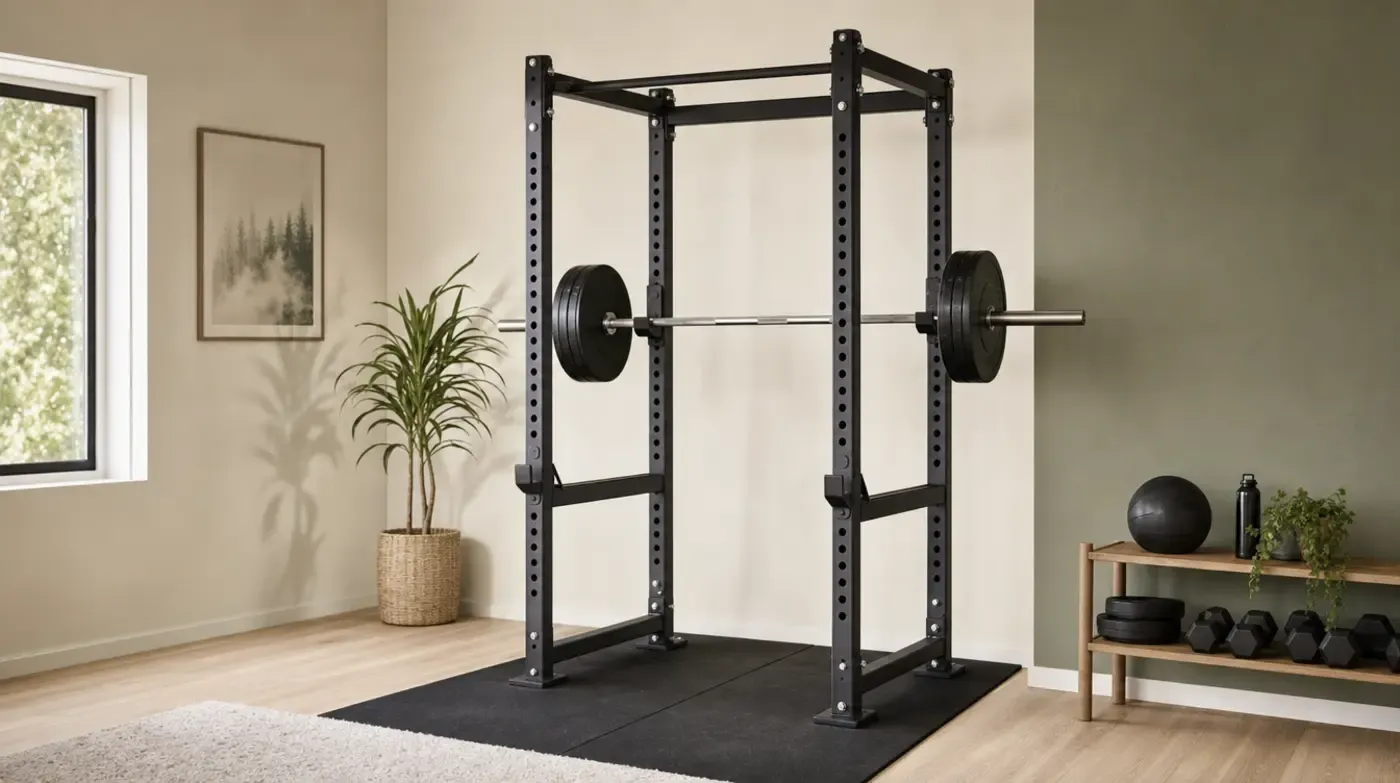
A rack is the piece that turns a pile of weights into an actual gym. It’s what lets you
squat, press, and bench with real load, and, just as importantly, lets you do it
safely on your own. That last part matters more every year: training alone at 45 with
no spotter is only sensible if something is there to catch the bar. Good news, you don’t
need a $1,000 rack for that. Under $300 buys a cage with proper safeties.
Here are the budget racks worth buying in 2026, judged first on safety, then on
sturdiness, footprint, and value.
What matters most (especially lifting solo)
Real safety bars or pins. Non-negotiable. They let you bail on a failed squat or
bench without a spotter. This is the whole reason to own a rack.
Capacity and steel. 2×2” 14-gauge steel and a 500 lb+ rating covers virtually every
home lifter. Don’t overpay for 1,500 lb you’ll never use.
Footprint and ceiling height. Measure first. A full cage needs ~7 ft of height and
a decent floor area; a stand fits tighter rooms.
A pull-up bar is a near-universal bonus, handy and free on most cages.
Stability. Bolt-down holes or plate-storage posts keep things planted under load.
Cage vs. stand, which should you get?
If you have the space, get a full power cage, the four posts and wrap-around safeties
are the safest setup for solo lifting. Only drop to a squat stand if a cage genuinely
won’t fit, and if you do, choose one with proper spotter arms (not bare uprights) and
set them carefully every session.
How we chose
We weighed current sub-$300 racks on safety hardware, steel and capacity, footprint, and
aggregated owner feedback. Where we’ve used a rack ourselves, the review says so and names
our editor; otherwise these are research-based picks, updated as we get hands-on time.
Yes, as long as it has proper adjustable safety bars or pins and you set them at the right height for each lift. A power cage with safeties lets you dump a failed rep onto the bars instead of onto you, which is exactly what makes solo home lifting safe. Just stay within the rack's rated capacity (most budget cages handle 500-800 lb, far more than most people load).
Squat stand, squat rack, or power cage, what's the difference?
A power cage is a four-post box with safety bars all around, the safest, especially when training alone. A squat stand is two posts: smaller and cheaper, but with less catch protection (look for one with spotter arms). For lifting alone over 40, a cage with safeties is the safer bet if you have the space.
Do I need to bolt it to the floor?
Many budget cages are stable enough unbolted for normal lifting, but bolting down, or loading the plate-storage posts with weight, adds stability for heavy or dynamic work. Always check the manual and set your safeties before you load up.
The over-30 fitness brief
One short email a week: what's worth buying, what's worth skipping, and what the
research actually says. No spam, unsubscribe anytime.