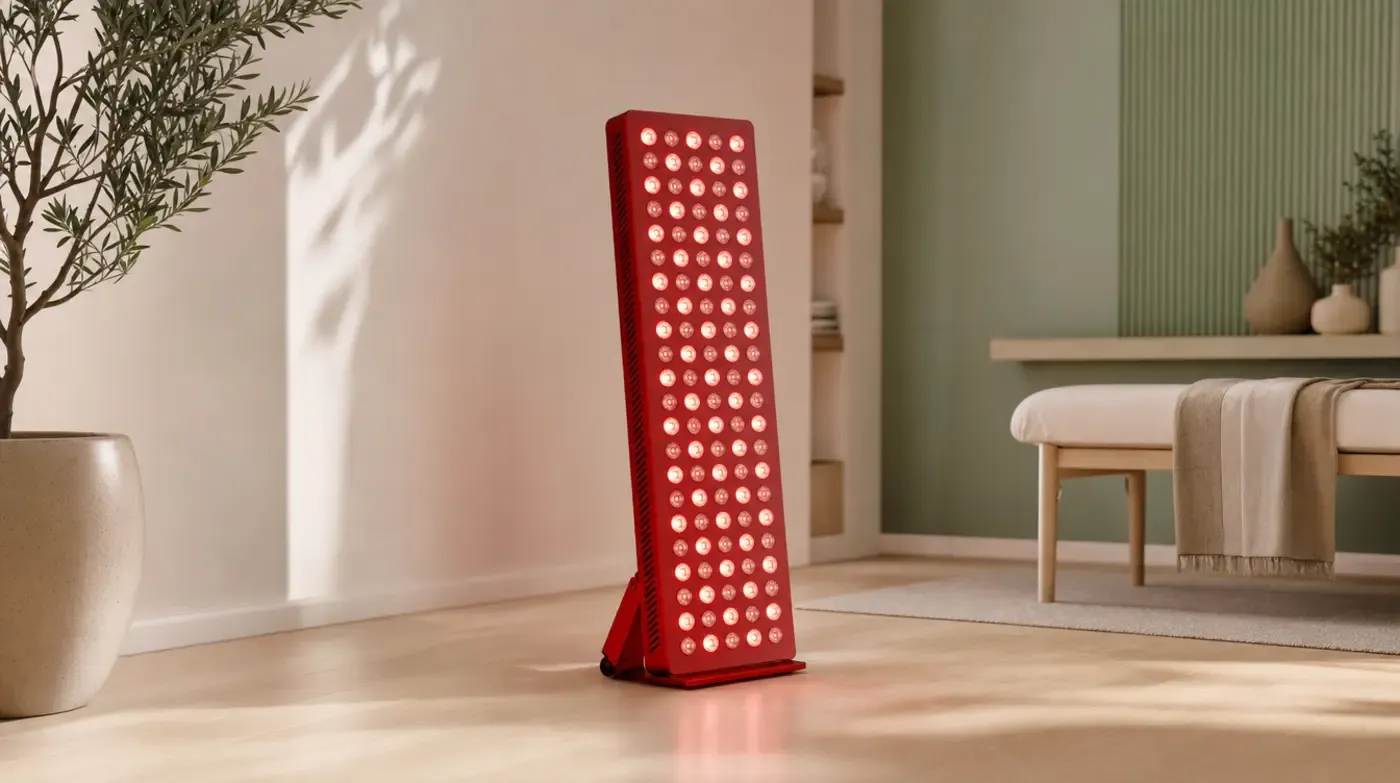
Red light therapy is one of the more genuinely interesting recovery tools to appear in
home gyms, and also one of the easiest to overpay for. The technology is real and the
research is encouraging, but marketing has run well ahead of the evidence, and some
brands charge several times what the same performance costs elsewhere.
So let’s be clear-eyed: here’s what the science actually supports, what to look for, and
the panels that give you real output without the premium markup.
What the evidence does (and doesn’t) say
There’s reasonable research that red (660nm) and near-infrared (850nm) light can support
muscle recovery, skin health, and some types of pain. The effects are real but generally
modest, study quality varies, and it is not a cure for anything. Anyone promising it
“melts fat” or “flushes toxins” is selling, not informing. Used realistically, it’s a
pleasant, low-risk addition to a recovery routine, not a replacement for sleep, protein,
and sensible training.
What to look for
Wavelengths: both 660nm and 850nm. That covers surface (skin) and deeper
(muscle, joints).
Irradiance (power): higher output means shorter sessions and deeper effect, but
it’s also where you can overpay.
Value per watt: the single most useful number for comparing panels. Budget brands
run ~$2-3/watt; premium can hit 4-7x that for similar real-world results.
Size: targeted panel for a shoulder or knee, full-body panel if you want to treat
large areas.
The biggest trap here is brand premium. As the picks below show, you can get the proper
wavelengths and strong output for a fraction of what the best-known names charge. Spend
the difference on actually using it consistently.
Safety
Red light is generally well tolerated, but use eye protection near bright panels, don’t
stare into the LEDs, and check with your physician if you have a medical condition,
are pregnant, or take medication that increases light sensitivity. This is general
information, not medical advice.
The picks in detail are below. Red light is a supplement to the basics, see where it
fits in our guide to recovering faster after 40,
or browse all our recovery content.
The picks in detail
Mito Red Light MitoPRO Series
Top pick, best value
660nm + 850nm · Strong irradiance per dollar · Full-body sizes · ~$3-5 per watt
Pros
Excellent performance for the price, roughly a third less than premium brands
The two best-researched wavelengths (660nm red + 850nm near-infrared)
Range of sizes from targeted to full-body
Cons
Not the absolute highest irradiance on the market
Verdict: The best balance of real power and price for most people. Where I'd start.
The honest answer: it's promising but still emerging. There's reasonable research support for red and near-infrared light helping with muscle recovery, skin, and some pain, but it's not a miracle, and quality varies hugely between studies. Treat it as a worthwhile maybe, not a guarantee, and ignore any brand promising dramatic cures.
What wavelengths should I look for?
The two most-researched are 660nm (visible red, works on surface tissue and skin) and 850nm (near-infrared, penetrates deeper to muscle and joints). A good panel offers both. Also check irradiance (power) and value-per-watt, that's where brands differ most.
How often and how long should I use it?
Most protocols are short, roughly 10-20 minutes on an area, a few times a week, at the distance the maker specifies. More is not better. Use eye protection if you're close to a bright panel, and check with your physician first if you have a health condition or take photosensitizing medication.