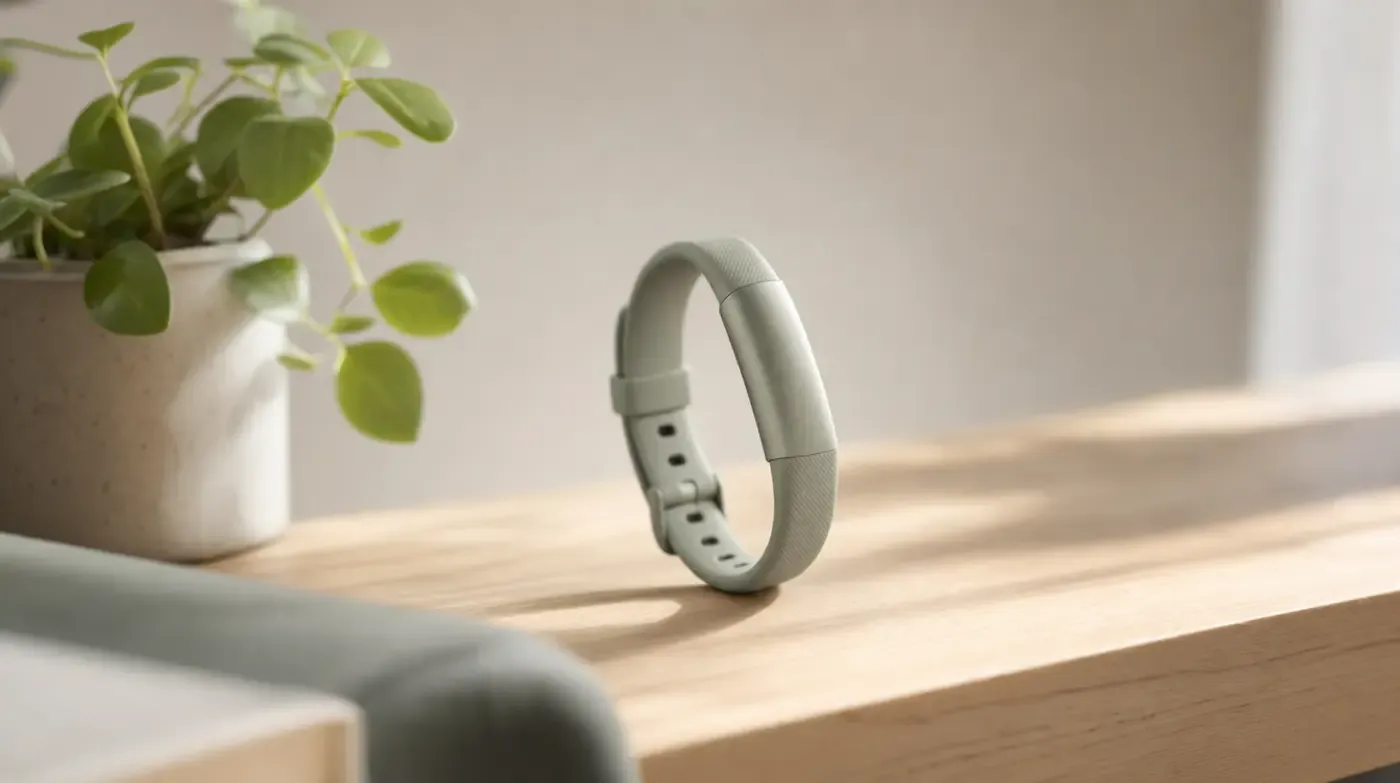
Google’s first genuinely new Fitbit in a while is the Fitbit Air: a $99.99,
screenless tracker that ditches the display entirely and leans on the Google Health app,
plus a new Gemini-powered AI Health Coach. On paper it’s the obvious budget rival to
Whoop and the Oura Ring. In practice, it’s a more interesting story, because the hardware
and the software are pulling in opposite directions right now.
Here’s the honest read, pulled from professional reviews and, just as importantly, what
actual owners are reporting in the first few weeks. (We haven’t worn one ourselves yet,
so this is a research-based review; when we do hands-on testing, our editor will say so.)
What’s genuinely good
Comfort. Reviewers and owners agree on this: with no screen and barely any weight,
the Air all but disappears on your wrist and tucks neatly under a sleeve. For 24/7 wear,
that matters more than spec sheets suggest.
Battery. Around seven days per charge, and a five-minute fast charge gets you close
to a full day. That’s a real strength for a set-and-forget tracker.
Price and no paywall for the basics. At $99.99 with no subscription required for
core tracking, it undercuts Whoop (subscription-locked) and the Oura Ring on entry cost.
The catch: accuracy complaints
This is where it gets complicated. Professional reviews praised the Air’s sleep reports,
but a meaningful chunk of early owners on Reddit and X report the opposite. One owner
said the device logged roughly an hour of sleep as 422 steps; another called the
sleep-tracking “100% useless,” and several describe questionable sleep and activity data.
There were also launch pairing problems on Android (an “app update required” message tied
to the Google Health app version).
Two honest caveats on that: early-launch tracking bugs are common and often improve with
firmware and app updates, and loud complaints tend to outnumber quiet satisfaction online.
But when a tracker’s whole job is the data, “is the data right?” is the question that
matters, and right now the answer is genuinely contested.
The AI Health Coach is a preview, not a product
The headline feature is a Gemini-based AI Health Coach, and it’s the weakest part.
Reviewers found it makes mistakes and occasionally hallucinates, with gaps around food and
calorie tracking and limited customization, and the app nudges you toward it constantly.
It’s explicitly a public preview and lives behind Premium. Promising direction, not
something to buy the device for today.
What it’s missing
No screen (you can’t glance at the time or your stats), no GPS, and no NFC for
payments. And because you take it off to charge, you lose a slice of the continuous data
that’s supposed to be the point. None of these are dealbreakers for a background tracker,
but know them going in.
Who it’s for
Buy it if: you want a featherlight, weeklong-battery, set-and-forget tracker for
around $100, you live in the app rather than glancing at a wrist screen, and you can
tolerate some early-software roughness.
Skip it (for now) if: you need dependable sleep accuracy today, want GPS or a
screen, or you’re buying mainly for the AI coach. For a screen and GPS at a similar
price, the older Fitbit Charge 6 is worth a look while it’s discounted.
What owners are saying (Reddit & X)
The most useful signal on a three-week-old device is owner chatter, and it’s split. The
positives center on comfort, weight, and battery. The negatives center almost entirely on
data trust: sleep sessions missed or misclassified, activity counts that don’t match
reality, and frustration that Google hadn’t acknowledged the reports. If you buy now, do
it from somewhere with an easy return policy and check your first week of data against how
you actually slept and moved.
Verdict
The Fitbit Air is lovely hardware at a genuinely good price, wrapped around software
that’s not finished. If the tracking complaints get patched and the AI coach matures, this
is an easy recommendation for most people who want comfortable, cheap, 24/7 tracking.
Today, it’s a cautious buy: brilliant in the hand, unproven in the data.
The picks in detail
Google Fitbit Air
Reviewed
Screenless band · ~7-day battery, 5-min fast charge · Sleep, heart rate, activity · Gemini AI Health Coach (Premium) · $99.99, no subscription required
Pros
Featherlight and genuinely comfortable to wear 24/7
About a week of battery, with fast top-ups
Strong value at $100 with no required subscription
Detailed sleep reports on paper, when the data is right
Cons
Early owners report shaky sleep and activity accuracy
The AI Health Coach is a buggy public preview
No screen, no GPS, no NFC
Must take it off to charge, which gaps your 24/7 data
Verdict: Lovely, low-profile hardware at a great price, held back at launch by accuracy complaints and a half-finished AI coach. A strong buy once the software settles, a cautious one today.
It's mixed right now. Professional reviewers were impressed by its sleep reports, but a notable number of early owners on Reddit and X report the opposite: misread sleep (one said it logged an hour of sleep as 422 steps) and tracking they called unreliable. This is the kind of thing software updates often fix, but test it against your own experience inside the return window before trusting it.
Do I need a subscription?
Not for the basics. The Air is $99.99 with no subscription required for core tracking. The Gemini-powered AI Health Coach and deeper insights sit behind Fitbit/Google Health Premium ($9.99/month or $79.99/year), and the Air includes a 3-month trial.
Does the Fitbit Air have a screen or GPS?
No to both. It's screenless (you read everything in the app) and has no built-in GPS or NFC. If you want at-a-glance stats on your wrist or phone-free run mapping, look at the Fitbit Charge 6 or a Pixel Watch instead.